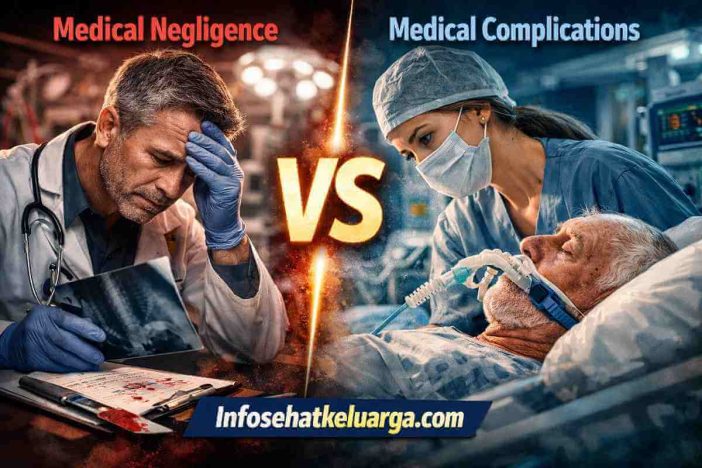
Medical negligence vs medical complications is one of the most misunderstood distinctions in healthcare decision-making. When treatment results in harm, families are often left navigating grief, confusion, and suspicion—without clear guidance on whether an outcome reflects a breach of professional duty or an inherent medical risk.
This distinction matters deeply. Mislabeling a complication as negligence can destroy trust and delay healing, while failing to recognize true negligence can leave families without accountability or closure. This guide explains the difference clearly, practically, and responsibly—before uncertainty escalates into conflict.
Why the Difference Between Medical Negligence and Medical Complications Matters
Understanding medical negligence vs medical complications is not about blame—it is about clarity.
For families, this distinction affects:
- How responsibility is understood
- Whether concerns are raised constructively
- How communication with providers unfolds
- When legal or formal review may be appropriate
Most disputes begin not with evidence, but with misunderstanding.
This discussion is part of our broader Family Health Law, Rights & Medical Liability framework, which examines how legal responsibility, patient protection, and healthcare decision-making intersect in real-world medical situations.
What Are Medical Complications?
Medical complications are undesirable outcomes that occur despite appropriate care.
They may arise from:
- Known risks of a procedure
- Individual biological variation
- Pre-existing conditions
- Unpredictable responses to treatment
A complication does not automatically mean a mistake occurred.
Examples of Common Medical Complications
- Infection after surgery despite sterile technique
- Unexpected bleeding due to individual clotting response
- Medication side effects that were known but unavoidable
- Delayed recovery in patients with complex health histories
In these cases, the standard of care may still have been met.
What Is Medical Negligence?
Medical negligence occurs when a healthcare provider fails to meet the accepted standard of care, and that failure causes harm.
In the context of medical negligence vs medical complications, negligence involves:
- A deviation from professional standards
- An avoidable error
- A direct link between the error and harm
Negligence is not about bad outcomes—it is about how care was delivered.
The Legal Standard of Care Explained Simply
The “standard of care” refers to what a reasonably competent healthcare professional would have done in similar circumstances.
It considers:
- The clinical situation at the time
- Available information and resources
- Accepted medical practices
- Urgency and risk level
Outcomes are judged based on decisions made at the time, not in hindsight.
Medical Negligence vs Medical Complications in Real-World Scenarios
Understanding this difference becomes clearer through practical examples.
Scenario 1: Surgical Infection
- Complication: Infection occurs despite proper sterilization, monitoring, and timely treatment.
- Possible Negligence: Infection ignored despite clear signs, delayed response, or failure to follow protocol.
The outcome may look similar, but responsibility differs.
Scenario 2: Missed Diagnosis
- Complication: Rare condition presents with atypical symptoms despite reasonable evaluation.
- Possible Negligence: Clear warning signs dismissed without appropriate testing.
The question is not whether the diagnosis was missed—but whether it should reasonably have been caught.
How Informed Consent Affects the Negligence vs Complication Debate
In disputes involving medical negligence vs medical complications, informed consent is often central.
If a known risk was:
- Properly explained
- Understood by the patient
- Documented clearly
Then an adverse outcome may be considered a complication rather than negligence.
This is why informed consent—explained in depth in our guide on What Is Informed Consent in Medical Treatment?—is a cornerstone of responsible care.
Many disputes surrounding medical negligence versus complications are rooted in ethical tension rather than legal breach, an issue explored further in our Medical Ethics, Consent & Decision-Making section.
The Role of Patient Rights in Medical Negligence vs Medical Complications
Disputes rarely exist in isolation. They sit within a broader framework of patient authority and responsibility, as outlined in our pillar guide on Understanding Patient Rights in Family Healthcare Decisions.
Patient rights clarify:
- Who had decision authority
- Whether risks were accepted knowingly
- How responsibility is shared
Without this context, judgments become emotionally driven rather than fact-based.
Why Many Families Mistakenly Assume Negligence
Several factors fuel confusion around medical negligence vs medical complications:
- Medical language is complex
- Outcomes feel personal and unfair
- Online narratives favor blame
- Emotional distress clouds judgment
None of these factors alone establish negligence.
When Concerns Are Reasonable—and How to Raise Them Responsibly
Not every concern indicates wrongdoing, but every concern deserves respect.
Families should consider raising questions when:
- Information is inconsistent or unclear
- Symptoms were repeatedly dismissed
- Protocols appear ignored
- Documentation is incomplete
Raising concerns does not require accusation. Clear questions often reveal whether an issue is systemic, unavoidable, or potentially negligent.
Medical Negligence vs Medical Complications and Legal Liability
From a legal perspective, courts typically examine:
- Whether the standard of care was met
- Whether harm was foreseeable and avoidable
- Whether informed consent was valid
- Whether documentation supports decision-making
Complications without deviation from standard care generally do not result in liability.
Expert Insight: How Families Can Navigate Unclear Outcomes
Experienced patient advocates and healthcare reviewers recommend:
- Requesting clear explanations in writing
- Reviewing consent documentation calmly
- Seeking second opinions for understanding, not confrontation
- Distinguishing emotional impact from legal responsibility
- Avoiding assumptions before facts are clear
These steps protect both families and providers.
Frequently Asked Questions About Medical Negligence vs Medical Complications
Does a bad medical outcome always mean negligence?
No. Many adverse outcomes are recognized risks rather than errors.
Can complications still lead to legal action?
Only if the standard of care was breached or consent was invalid.
Who decides whether something was negligence?
Independent medical and legal review—not patient opinion alone.
Should families confront providers immediately?
Clarification should come before confrontation. Early dialogue often prevents escalation
Why Understanding Medical Negligence vs Medical Complications Protects Everyone
Clear understanding benefits:
- Patients seeking honesty
- Families seeking closure
- Providers practicing responsibly
- Healthcare systems maintaining trust
Misunderstanding harms all sides.
🔹 Bottom Line: Clarity Before Conflict
Medical care is never risk-free. But confusion should not compound harm.
Families who understand medical negligence vs medical complications are better equipped to ask informed questions, recognize legitimate concerns, and avoid unnecessary conflict. Clarity—grounded in facts rather than assumptions—is the strongest protection for everyone involved.
This article follows Infosehatkeluarga.com’s Editorial Policy and Content Review & Verification Policy and is provided for educational and informational purposes only.
Reference
- Standards discussed by major medical associations
- Principles commonly applied in healthcare liability review